
Back When You Could Actually Own Your Car - Not Just Pay to Keep Using It
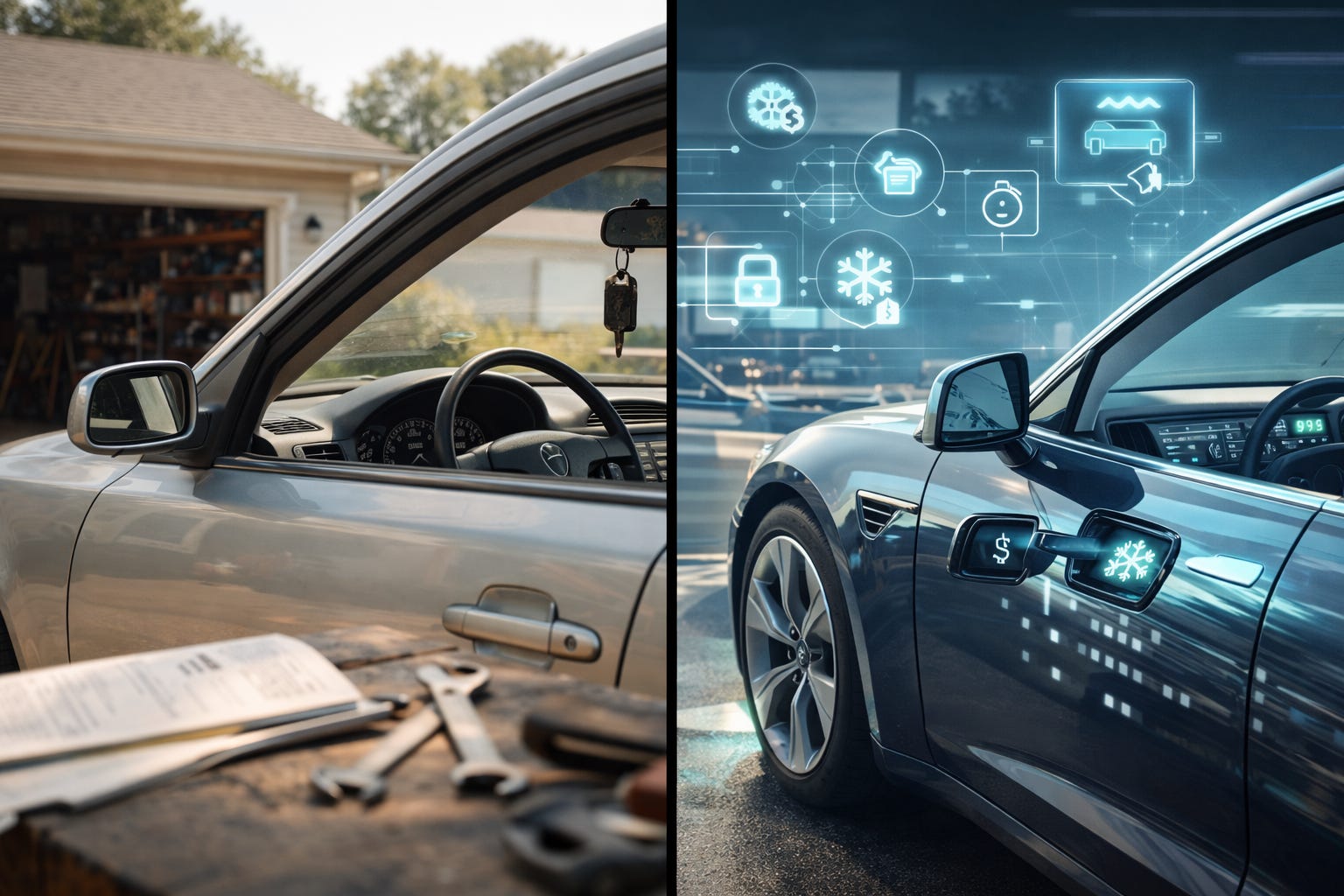
You Don’t Own Your Car Anymore - You Maintain Permission to Use It
Let’s cut to the chase!
When the average new vehicle costs more than $50,000, that’s not just a pricing problem. That’s a quiet rewrite of what ownership even means in this country, and nobody in a navy suit on Sunday morning shows seems interested in saying it out loud.
We grew up understanding the deal. You bought a car, you paid it off, and then it was yours. Not temporarily yours. Not conditionally yours. Yours. The thing sat in the driveway like a stubborn old dog that might leak a little oil but would still get you to work without asking permission from a software update.
That was ownership.
Now we are sliding into something else, and it’s happening with the smooth language of people who never met a recurring revenue stream they didn’t like. Today’s vehicles come wrapped in financing terms long enough to raise a child, bundled service plans, and software-controlled features that can be toggled on or off depending on what you’re willing - or able - to keep paying.
They call it innovation.
Of course they do. The professional class has a word for everything that shifts power upward and risk downward. Heated seats that need a subscription are not a glitch in the system. They are the system. Navigation that expires unless renewed is not progress. It’s rent.
You’re not buying a machine anymore.
You’re entering a relationship.
And like most modern relationships, it comes with terms and conditions nobody reads and consequences nobody votes on. Reliable transportation used to flatten opportunity. A contractor in a used pickup could stand shoulder to shoulder with a consultant in a German sedan because both could get where they needed to go without asking permission from a billing portal.
That’s changing.
When capability depends on continuous payment, mobility becomes tiered. The car may be in your driveway, but parts of it are still on the company’s leash. Miss enough obligations and the old risk was repossession. The emerging risk is something quieter - features fade, access tightens, and the machine you thought you owned starts behaving like a service you’re behind on.
Meanwhile, the political class keeps telling us inflation is cooling, as if households live inside spreadsheets instead of real lives. They argue percentages while families make decisions in thresholds. The moment when “we’ll buy new” becomes “we’ll stretch this one another five years” is not theoretical. It’s happening in driveways across the country.
And here’s the part nobody wants to say plainly.
When transportation depends on staying current in a chain of payments, independence becomes conditional. The old middle-class assumption that you could own the tools of your daily life outright is giving way to a model where access must be maintained.
Not earned and kept.
Maintained.
That’s not just about cars. It’s about the quiet shift from owning the basics of your life to managing permission to use them, and the people selling this shift are doing it with the same confidence politicians use when they promise relief while voting for complexity.
Funny how that works.
_____________________________
✨NEWS BITES
Click here for your weekly roundup of stories that matter but do not make it to your inbox.
✨Sanity Break: Good News Edition
Click here for ALL weekly roundups of grounded good news focused on Autism and Developmental Disabilities
TIP: The Substack app can make things look cramped. If you want to see the essays the way they were meant to breathe, tap this web link wswancutt.substack.com to my home page and bookmark it for a cleaner viewing. Thanks.
_________