
Citizens United: The System That Eats Its Own
Sixteen Years of Money, Power, Democracy Running on Empty
Author’s Note
In 2010, the U.S. Supreme Court decided Citizens United v. Federal Election Commission in a 5–4 ruling that fundamentally reshaped American campaign finance law. The Court held that corporations and unions have a First Amendment right to spend unlimited money on political advocacy, so long as that spending is not formally coordinated with a candidate’s campaign.
The decision overturned decades of precedent that had limited corporate political spending and accelerated the rise of Super PACs and large-scale, often undisclosed political money. What follows is not a legal brief or a history lesson. It is an examination of what that ruling set in motion - and what it has cost American democracy sixteen years on. -Woodrow
__________
Sixteen years in, Citizens United is no longer a controversial Supreme Court decision. It’s infrastructure. It is baked into how American power works, how elections are financed, how policy is shaped, and how accountability quietly disappears without anyone needing to announce it.
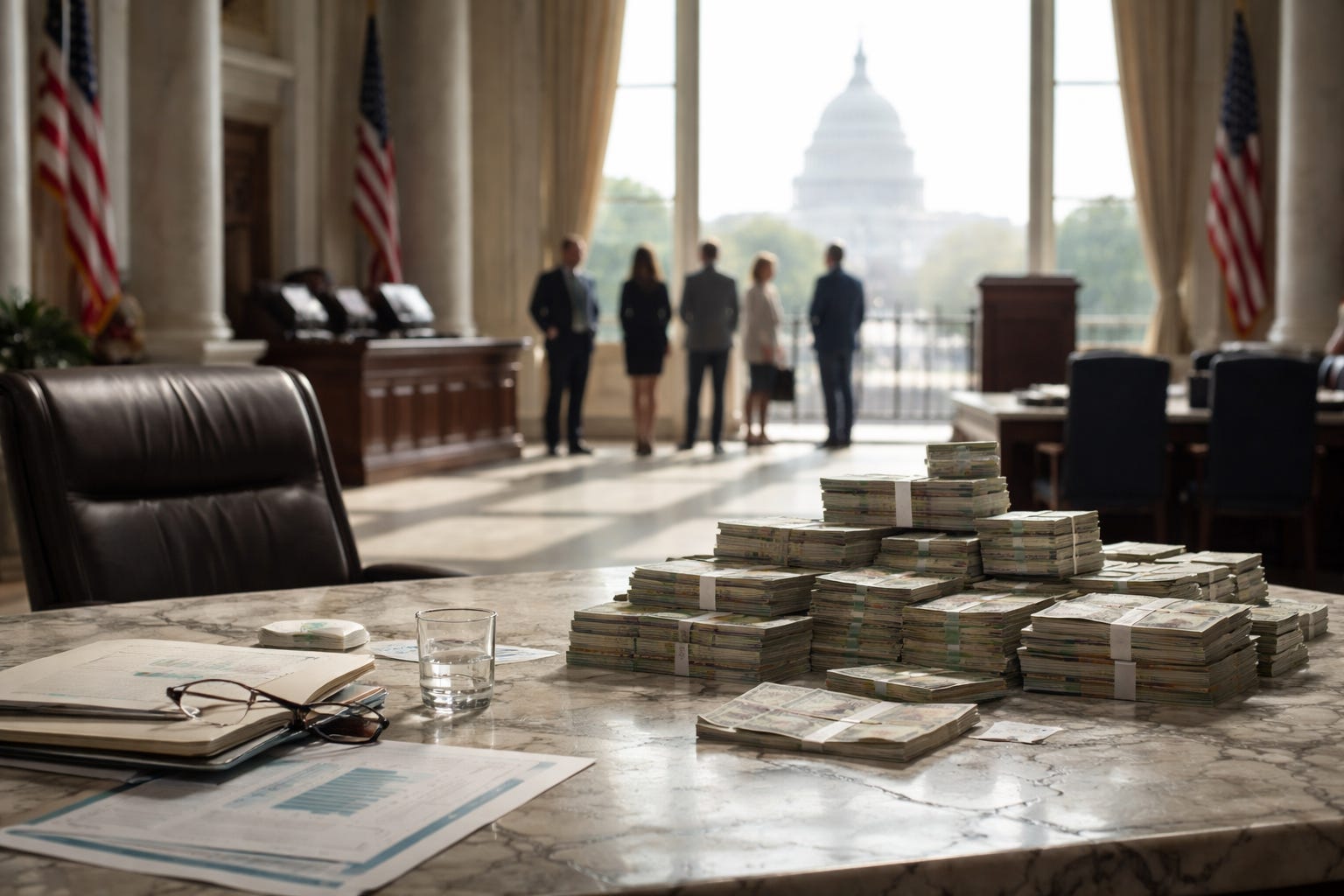
At its core, the ruling did two things that should never have been welded together. It declared that money is speech, and that corporations are people for the purposes of that speech. Once those two ideas were fused, the rest followed with mechanical certainty. Unlimited spending. Minimal disclosure. A permanent advantage for those who already have more than they could ever need.
The result was not a louder democracy. It was a tilted one.
What Citizens United actually changed was who the system listens to first, last, and often exclusively. Candidates no longer run simply to win votes. They run to secure financial viability. Officeholders no longer ask what voters want so much as what they can do without triggering a funding backlash. Elections still happen, but the menu is preselected.
That’s the obvious damage. The deeper damage is where the effects spread.
Congress has been hollowed out. When every major vote carries a financial tripwire, legislative courage becomes a career risk. That’s why broadly popular policies stall indefinitely. Gun safety. Climate action. Drug pricing. Tax reform. The public is not confused. The system is constrained.
The courts didn’t escape this gravity either. Big money didn’t just flood elections. It reshaped judicial selection itself. Dark money networks perfected the art of installing judges who would protect the very conditions that allowed dark money to thrive. Citizens United didn’t end with elections. It fortified itself.
Regulation warped next. Entire industries learned that the threat of spending was often enough. You didn’t need to buy a politician outright. You just needed to remind them who could fund their replacement. Oil and gas understood this early. So did finance. So did healthcare conglomerates. Policy drift wasn’t accidental. It was purchased silence.
And then there is trust. People didn’t suddenly become cynical for no reason. They noticed that outcomes no longer tracked public opinion. They noticed that elections changed faces but not priorities. Citizens United taught Americans, slowly and convincingly, that participation did not equal influence.
Which brings us to the uncomfortable question. If citizens have been pushing back for sixteen years and nothing fundamental has changed, what would actually force change?
History offers a bleak answer. Systems like this do not reform themselves because they are unjust. They reform when they become dangerous to the people running them.
The cost of no change is not abstract. It accumulates.
Legitimacy erodes to the point where governing becomes harder without coercion. Economic concentration grows so extreme that even political winners become hostages to market actors they cannot control. Public disengagement turns into refusal - refusal to vote, to comply, to believe, to cooperate.
That is the trigger elites eventually respond to. Not moral argument. Not polling. Instability.
The irony is that Citizens United was sold as expanding freedom. What it actually did was narrow the margin for error. It created a system where money must keep winning or the whole structure risks exposure. That makes compromise harder, governance brittle, and leadership timid.
So who ultimately feels the pain?
Politicians, when donor demands collide with economic reality and there’s no room left to maneuver.
Corporations, when public backlash hardens into boycotts, labor unrest, or regulatory whiplash driven by desperation rather than deliberation.
Courts, when their authority is questioned not by pundits but by governors, legislatures, and voters who stop treating rulings as legitimate.
And wealthy donors themselves, when the system they insulated becomes unstable enough to threaten the markets and institutions that protect their wealth.
That is not a hopeful ending. It’s an honest one. But honesty doesn’t require surrender.
So what can citizens actually do, right now, without pretending this is easy?
Taking Congress back matters. No question. Without that, nothing else moves. But even with better people in the seats, Citizens United hangs over everything like a bad mortgage that never gets paid off. Every decision is still made under its shadow.
Still, there are levers that don’t require waiting for permission.
Vote with discipline, not romance. Primaries matter. Reformers don’t appear by accident, and they don’t survive without early protection, before the money lines up to crush them.
Protest that causes economic pain. Not performative outrage. Not viral slogans. Pressure that hits balance sheets - boycotts, labor action, coordinated refusal to play along. History is clear on this. Power shrugs off noise. It responds to cost.
And strip legitimacy where it’s unearned. Call out conflicts. Name corruption plainly. Refuse to normalize a system that tells you this is just how it works.None of this guarantees success. But it does one crucial thing. It raises the price of delay.
Citizens United will not fall because we finally make the perfect argument. It will fall when enough people make it more expensive to keep than to fix.
That’s not hope as a feeling. That’s hope as pressure.
_____________________________
✨NEWS BITES
Click here for your weekly roundup of stories that matter but do not make it to your inbox.
✨Sanity Break: Good News Edition
Click here for all weekly roundups of grounded good news focused on Autism
__________
TIP: The Substack app can make things look cramped. If you want to see the essays the way they were meant to breathe, tap this web link wswancutt.substack.com to my home page and bookmark it for a cleaner viewing. Thanks.
#CitizensUnited #MoneyInPolitics #DemocracyAtRisk #Accountability