
Consequential Developments IRAN WAR IMPACT ON AFFORDABILITY - March 4, 2026
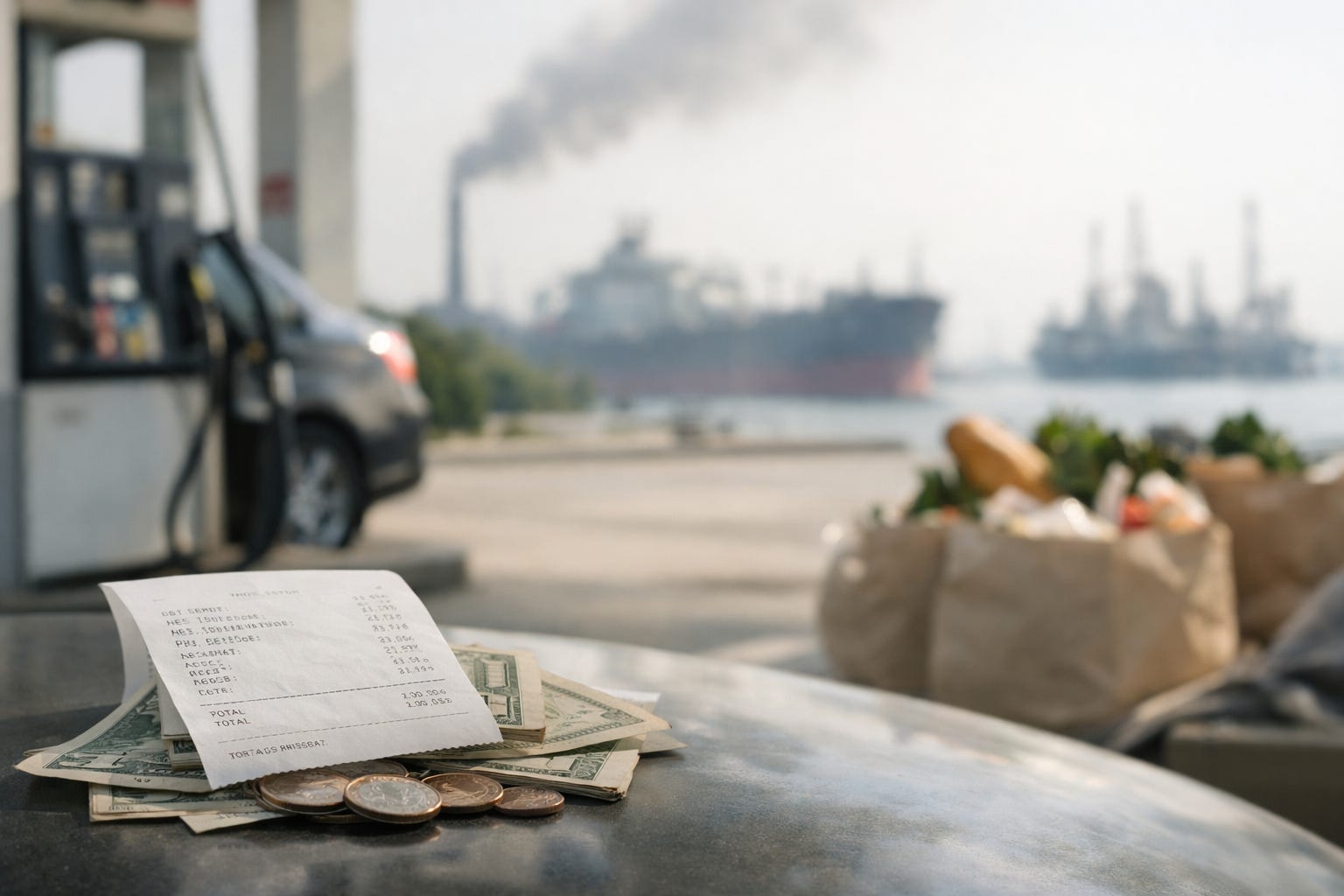
Oil jumps again - and the “it’s just geopolitics” crowd suddenly remembers you drive a car.
Oil prices moved higher again today as the Iran war keeps threatening supply routes and production across the region. That matters because oil is the quickest way a foreign crisis turns into a domestic bill - gasoline, diesel, home delivery fees, and anything shipped by truck all feel it fast. The price move is also a signal that markets are pricing in disruption risk, not just watching headlines like it’s a cable panel. What’s changing is the baseline - once traders start treating Hormuz risk as “normal,” businesses start building higher fuel costs into contracts instead of waiting it out. Households get hit first through commuting and heating costs, and then again through food and retail prices that ride on transportation. The people least able to absorb it - lower-income workers who can’t remote-work their way out of a long drive - take the sharpest blow. If you’re wondering whether this sticks, watch tanker traffic, actual export volumes, and whether producers can reroute or replace lost barrels quickly. Also watch the political turn where everyone discovers “energy independence” again - usually right before they demand someone else eat the cost.
Further coverage: CNBC Economy - https://www.cnbc.com/economy/
Hormuz disruption turns into a shipping bill - insurance pulls back and freight costs bite
The affordability story isn’t just the pump - it’s the ocean, too. Reporting this week shows war-risk insurance getting yanked or repriced in the Gulf, while traffic through the Strait of Hormuz drops and vessels stack up or reroute. When insurers and shippers start treating a corridor as high-risk, the cost doesn’t vanish - it gets added to the delivered price of energy and goods. What’s changing is the plumbing of global trade: longer routes, fewer willing carriers, and higher premiums mean higher landed costs even if the product itself hasn’t changed. The immediate victims are import-heavy supply chains - retailers, manufacturers waiting on components, and anyone selling “free shipping” like it’s a law of nature. For households, this shows up as higher prices on everyday goods and fewer promotions, because the margin gets eaten before the item even reaches a U.S. port. Small businesses feel it worse than giants because they can’t negotiate freight the same way and can’t spread costs across a thousand SKUs. The big watch item is whether the disruption remains intermittent or becomes a sustained constraint - sustained is where inflation gets sticky. Also watch for knock-on effects in LNG and diesel, because freight and power costs love to travel in packs.
Further coverage: U.S. Energy Information Administration (EIA) https://www.eia.gov/todayinenergy/prices.php
Washington talks tough - but the Strategic Petroleum Reserve story is “not yet,” which is a choice
U.S. officials are signaling there’s no immediate plan to tap the Strategic Petroleum Reserve even as war risk pushes energy costs higher. That matters because the SPR is one of the few tools that can dampen a price spike quickly - not forever, but long enough to keep panic pricing from becoming policy. What’s changing is the political calculus: releasing oil can ease prices, but it also invites a fight about how much is left, who “wasted it,” and whether it’s being used as a campaign prop. The people affected are basically everyone who buys anything that moves, plus state and local budgets that get hammered when fuel and procurement costs rise. Businesses that run fleets (delivery, construction, agriculture) start revising bids and project costs, and those revisions don’t politely reverse overnight. Watch for whether the administration shifts from “no plan” to “coordinated release” with allies - and watch what happens to refinery margins and regional fuel spreads, since crude isn’t the same thing as gasoline. Also watch Congress - price spikes tend to summon performative hearings where everyone blames everyone, and nobody touches the structural bottlenecks. If the White House starts talking about escorts and maritime protection, that’s a sign they’re treating shipping risk as persistent, not temporary.
Further coverage: PBS NewsHour - https://www.pbs.org/newshour/
Gasoline is already ticking up - the “it won’t affect you” line doesn’t survive contact with Monday’s data
Early U.S. retail fuel indicators are already moving higher at the outset of this conflict cycle, and that’s the part regular people notice without needing an explainer. EIA’s published price tables and related reporting show the week’s jump in gasoline as the war begins to filter into retail pricing. Why it matters is simple: higher fuel costs act like a tax on work, especially when wages don’t jump in sympathy. What’s changing is consumer behavior - people delay trips, cut discretionary spending, and start making smaller “protect-the-budget” choices that add up across the economy. The affected group isn’t abstract - it’s commuters, caregivers driving to appointments, hourly workers with multiple jobs, and anyone in a rural or exurban area where “public transit” is a nice concept from a brochure. Businesses feel it too because customers pull back, and because their own input costs rise at the same time. The watch item is whether this becomes a short spike or a multi-week grind - and the grind is what shows up in broader inflation measures and rate expectations. If you want an early tell, track weekly retail fuel averages and whether diesel follows - diesel is the quiet king of “everything costs more now.”
Further coverage: AAA Gas Prices - https://gasprices.aaa.com/
__________
Nobody gets to “not care about geopolitics” when it starts showing up on a receipt.
_____________________________
✨NEWS BITES
Click here for your weekly roundup of stories that matter but do not make it to your inbox.
TIP: The Substack app can make things look cramped. If you want to see the essays the way they were meant to breathe, tap this web link wswancutt.substack.com to my home page and bookmark it for a cleaner viewing. Thanks.
________
#affordability #energyprices #IranWar
The gas pump scam:
https://www.thecity.nyc/2026/01/20/gas-prices-octane-fuel-consumers/.
Same scenarios.
Insane.
Thanks for this essay. Good stuff.
This what we are constantly dealing within NYC:
https://lavocedinewyork.com/en/new-york/2026/01/12/city-finds-hundreds-of-faulty-food-scales-in-nyc-grocery-stores/.
Now I hear gas station are selling regular for premium. >90% inspected.
I will not leave the demographic stuff of it all.