
Report on Planet Earth
Submitted to the Interstellar Council after several thousand years of observation
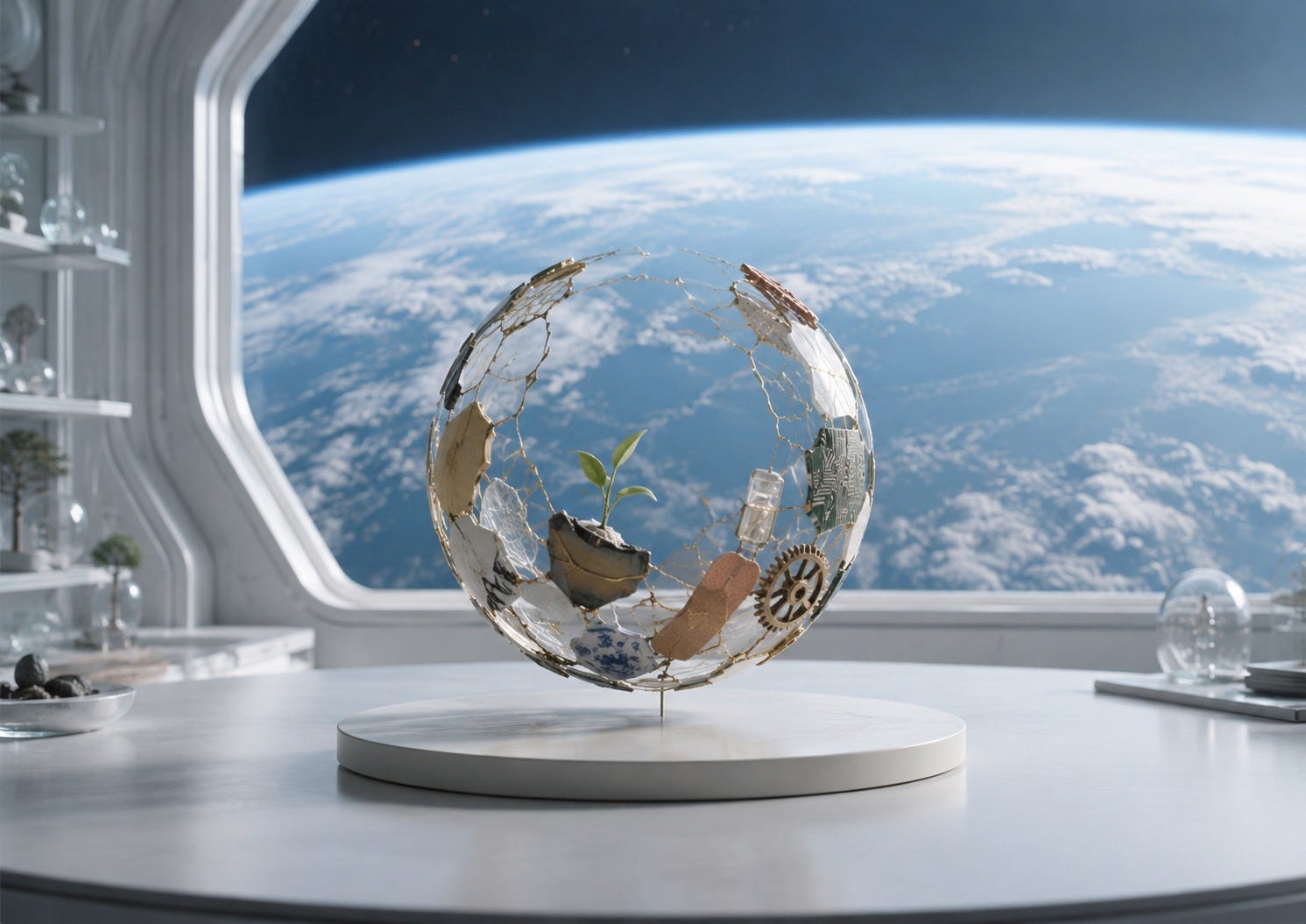
The dominant species calls itself Homo sapiens, meaning “wise human.” This appears to be aspirational branding.
Humans are unusually inventive. They learned to preserve knowledge, cultivate food, cross oceans, prevent diseases, split atoms, communicate across the planet, and send machines beyond their own solar system. They can calculate the age of the universe, transplant a human heart, and compose music capable of moving strangers to tears.
Their inventions, however, are rarely confined to their highest purposes. They also regularly use these achievements to sell each other useless products, spread lies more efficiently, and develop improved methods of killing people they’ve never met.
The species is deeply social but persistently tribal. Humans divide themselves by territory, language, religion, ancestry, class, political affiliation, and minor differences of opinion. They then treat these invented divisions as if they were laws of physics. Every generation announces that it has finally overcome the ignorance of previous generations. Evidence remains mixed.
Humans admire honesty but often reward confidence. They claim to want leaders of character, then select candidates who flatter their fears and promise that sacrifice will be required mainly from somebody else. Their political systems vary, but nearly all eventually produce a professional class of people who explain why failure was unavoidable and why they should remain in charge.
Their economic arrangements are equally curious. They’ve created enough food and productive capacity to meet the basic needs of the population, yet millions remain hungry, homeless, or untreated. This isn’t generally caused by a lack of knowledge. It appears to be a problem of priorities, incentives, and the persistent belief that suffering builds character - particularly when somebody else is doing the suffering.
Humans are capable of remarkable kindness. They rescue strangers from floods, care for children who aren’t their own, sit beside the dying, rebuild communities after disasters, and risk their lives for people whose names they don’t know. During emergencies, they often cooperate naturally. Once the emergency passes, they return to arguing over who deserved assistance.
The species possesses a strong moral imagination but applies it inconsistently. Humans can recognize injustice centuries after it occurs and several thousand miles away. Recognizing it while it’s happening nearby remains more difficult, particularly when doing so might be inconvenient, expensive, or unpopular.
They’re also aware that their planet’s climate and ecosystems are changing because of their activity. They’ve measured the problem carefully, debated it endlessly, and developed many workable solutions. Implementation has been delayed while interested parties commission additional reports.
Their greatest contradiction is this: humans know that every person is temporary, fragile, and dependent upon others, yet they build societies around the fiction of complete independence. They know they’ll die, but behave as though accumulation is a form of immortality. They know their children will inherit the consequences of today’s choices, but frequently discount those consequences because the quarterly numbers look better.
Final assessment:
Humanity is neither hopeless nor reliably wise. The species is unfinished.
Its capacity for cruelty is substantial, but so is its capacity for courage, cooperation, beauty, humor, and repair. Humans are often at their best when circumstances force them to remember that they need one another. Their long-term survival may depend upon learning this without first requiring a catastrophe.
Recommendation:
Continue observation.
Avoid direct contact until they stop appointing the most certain person in the room to make decisions for everybody else.
_____________________________
This publication is free. If this piece is worth reading, please tap the restack button - the circle-arrow icon - so others can find it too.