
We Are Not the Customer
Nature does not serve us. We live inside it, and the bill always comes due.
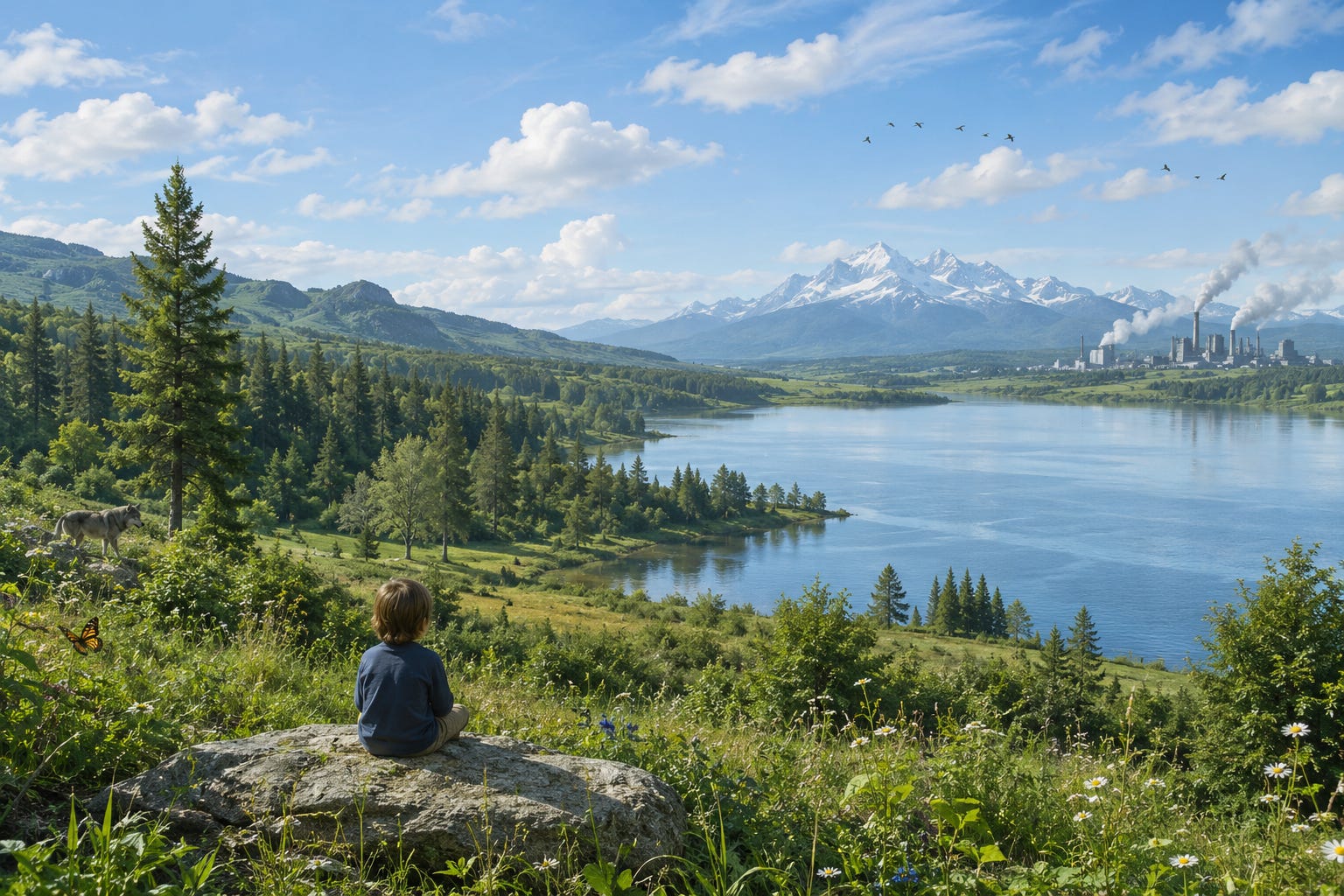
The thought came to me while sitting on the porch watching a spider build a web.
There was nothing remarkable about it. No dramatic sunrise. No profound moment. Just a spider moving from strand to strand with a patience that would drive most people crazy. It worked for a while, stopped, then worked some more. The web gradually appeared out of what looked like empty air.
As I watched, I found myself wondering what the spider thought it was doing. The answer, of course, is probably nothing at all.
The spider was not trying to create beauty. It was not contributing to the ecosystem. It was not helping maintain biodiversity. It was not participating in a carbon cycle. It was not supporting life on Earth. It was building a web.
The rest is our description.
That thought stayed with me. As often happens when you are sitting quietly and letting your mind wander, one question led to another. Before long, I found myself asking a question that seemed simple at first: What do I mean when I say “ecology”?
Most of us use the word as if we already know the answer. We talk about ecosystems, carbon sinks, pollinators, wetlands, forests, and oceans. We discuss them as though they have jobs to perform. Forests capture carbon. Bees pollinate crops. Wetlands protect communities from floods. Oceans regulate the climate.
Listen closely and you will notice something curious. We describe these things almost as if they exist for us. A forest becomes a “carbon sink.” A wetland becomes “flood protection.” A bee becomes an agricultural worker that never receives a paycheck.
Yet none of those things are why they exist. The forest is not trying to stabilize the climate. The bee is not trying to improve crop yields. The wetland is not protecting anyone. The spider outside my porch certainly was not thinking about biodiversity.
They are simply doing what they do. The benefits we receive are real, but they are consequences, not intentions. And somewhere in that realization, it struck me that perhaps we have placed ourselves in the center of a story where we were never meant to be the main character.
For centuries, we have told ourselves a comforting story. We are the managers. The planners. The decision-makers. The species that stands outside the system looking in.
We study the forest. We measure the river. We map the ocean currents. We calculate the carbon. Then, almost without noticing, we begin to speak as though the system itself is something separate from us - something we observe, direct, improve, or misuse.
But the spider has no such illusion. Neither does the oak tree in the yard. Neither does the fox moving through the woods at night. Neither do the bacteria in the soil beneath my feet. They are not standing outside the system. They are inside it. So are we.
That may be the most important lesson ecology has to teach, and it is one that our culture often struggles to accept.
We are remarkably clever. We build cities. We split atoms. We send machines to other planets. We have developed the ability to alter landscapes, rivers, and even the chemistry of the atmosphere itself. Those achievements are real.
But they do not place us above the system any more than a beaver’s dam places a beaver above the river. They simply mean that our influence is larger.
The river still responds according to the laws of water. The atmosphere still responds according to the laws of physics. Living things still respond according to the pressures and opportunities around them. Reality gets the final vote.
That is why so many arguments about the environment seem to miss the point. One side often speaks as though nature is fragile and waiting for instructions. The other speaks as though nature is infinitely resilient and can absorb whatever we throw at it. Both views quietly assume that humanity is at the center of the story.
The system itself does not care about our assumptions. If a species alters its environment beyond what it can tolerate, consequences follow. If a species adapts successfully, different consequences follow. There is no reward. There is no punishment. There is no moral judgment.
There is only the unfolding of cause and effect.
That can sound cold at first. People sometimes hear it and conclude that nothing matters. I take the opposite lesson.
Understanding that we are participants rather than managers makes our choices more important, not less. A manager believes he can command outcomes. A participant understands that every action enters a web of relationships too large to fully comprehend.
Plant a forest and the effects ripple outward. Clear a forest and different effects ripple outward. Pollute a river and the system responds. Restore a river and the system responds again.
The response may not be immediate. It may not even be visible to us. But the response comes all the same.
The spider on the porch was teaching that lesson without knowing it. It was not serving a purpose assigned by humans. It was not fulfilling a role in a management plan. It was not trying to make the world better. It was simply participating in the world as it existed.
Perhaps that is the missing piece in how we think about ecology.
Not that nature serves us. Not that we serve nature. But that all of us - spider, oak tree, river, fox, forest, ocean, and human being - are caught in the same vast web of relationships.
We tug on a strand and something else moves. Often we cannot see what moved until much later.
The spider understands its strand. We understand a few more than that. Yet even with all our science, all our technology, and all our confidence, we still see only a small part of the web.
The world was spinning long before we arrived. It will continue spinning after we are gone. We matter. Our choices matter. What we build, destroy, protect, and neglect all matter.
But we are not the customer. We never were.
We are simply fellow travelers in a system far older, far larger, and far less concerned with us than we like to imagine.
_____________________________
Also from me: For my focused writing on autism, developmental disabilities, Medicaid, and the safety net, visit Safety Net Watch at safetynetwatch.substack.com
______